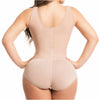
Abdominal Board After Liposuction: When to Start and How to Use It

An abdominal board (or foam pad system) is one of the most underrated tools in lipo recovery. Worn under your compression faja, it works quietly in the background to prevent fibrosis, distribute pressure evenly, and guide your body toward the smooth, sculpted results you paid for.
But when do you start wearing one? How does it work? And what happens if you skip it?
This guide answers those questions with clinical clarity and practical advice.
What Does an Abdominal Board Do During Lipo Recovery?
Liposuction removes fat cells, but your body's healing response determines your final appearance. During the first 3 months post-op, your body faces two competing processes:
- Fibrosis: The formation of scar tissue in the areas where fat was removed. If left unmanaged, fibrosis creates hard, bumpy, orange-peel-textured areas that can persist for years.
- Skin retraction: Your skin is reattaching to underlying muscles and tightening. You want this to happen evenly and smoothly.
An abdominal board prevents the first and supports the second:
- Even pressure distribution: Instead of random compression points from your faja's seams or stretchy fabric, a foam pad system spreads pressure evenly across the entire surgical zone. This tells your body's healing response: "No fibrosis here—keep it smooth."
- Fibrosis barrier: Consistent, even compression minimizes the inflammatory cascade that leads to hard scar tissue formation.
- Skin guidance: Even pressure encourages skin to retract smoothly rather than bunching or puckering in some areas while staying loose in others.
"The abdominal board isn't glamorous, but it's the difference between 'good results' and 'wow, those are incredible results.' It's that important." – Post-Surgical Recovery Specialist.
When Should I Start Wearing an Abdominal Board After Lipo?
Most surgeons recommend starting an abdominal board around day 3–5 post-op, though the exact timing depends on your surgery and drain management.
Timeline Breakdown:
- Days 1–2: You're managing surgical drains, initial swelling, and fresh incisions. Your faja alone provides enough initial compression. An abdominal board can interfere with drain management.
- Days 3–5: Once your surgeon confirms that drains are working well (or have been removed), begin introducing the abdominal board. Start with it under your faja for 4–6 hours daily if you're uncomfortable, then increase to full-day wear.
- Weeks 2–12: Continuous use of the abdominal board under your faja, 24/7, during all compression wear (including during sleep).
- Weeks 12+: Many surgeons recommend continuing light abdominal board use for another 3–6 months, even as you transition to lighter shapewear. This continues to minimize fibrosis risk during the late remodeling phase.
Always confirm with your surgeon before starting an abdominal board. Some may ask you to wait longer if you have extensive drains or specific abdominal concerns.
How to Wear an Abdominal Board Correctly
Proper placement is crucial. Worn incorrectly, a board can create pressure points—the opposite of what you want.
The Correct Order (Bottom to Top):
- Bare skin or thin undershirt: Some prefer the board against skin; others like a thin, breathable undershirt underneath to reduce friction and sweat accumulation.
- Abdominal board or foam pad system: Place the flat foam surface directly over the surgical area, centered from your lower ribs to your hips. It should sit flat, with no wrinkles or bunching underneath it.
- Compression faja: Put your faja on over the board. The board stays in place under the faja's compression; the faja holds everything together.
Fitting Tips:
- No lumps or wrinkles: The board should sit completely flat against your abdomen. Any wrinkles or lumps create pressure points and defeat the purpose.
- Coverage: The board should cover the entire area where liposuction was performed, not just the central abdomen. If you had flanks done, the board should extend to the sides.
- Gentle pressure: When you put your faja on over the board, you should feel even, gentle pressure—not bunching or pinching.
- Room to breathe: The board + faja combo shouldn't feel suffocating. If you're gasping or experiencing numbness, loosen your faja slightly or adjust the board position.
How Long Should You Use an Abdominal Board?
The shorter answer: 3–4 months minimum for critical fibrosis prevention.
The longer answer depends on your goals and surgeon's guidance:
- Weeks 1–12 (3 months): Use an abdominal board continuously, 24/7, under your faja. This is the peak fibrosis risk window. Your body's scar tissue response is most active during this time.
- Months 3–6: Many surgeons recommend continuing to use a board 12–18 hours daily, even as you shift to lighter shapewear during the day. This continues to guide healing and prevent late-stage fibrosis.
- After 6 months: Your fibrosis risk drops significantly. You can transition to regular shapewear or discontinue use, as directed by your surgeon.
The investment of 3–4 months of board use now prevents 3–4 years of visible lumps, bumps, and irregularities.
Abdominal Board + Faja: Common Mistakes
- Wearing the board OVER the faja: This is backwards. The board goes under the faja so the faja's compression holds it in place and prevents shifting.
- Skipping the board entirely: "My surgeon didn't specifically say to use one." If your surgeon didn't forbid it, using a board is a no-risk optimization. Most surgeons assume you'll use one; they may not always mention it explicitly.
- Using a wrinkled or improperly fitted board: Wrinkles create pressure points. Take time to smooth the board flat every time you put it on.
- Switching to shapewear too early: At week 6, even if you downgrade to lighter shapewear, continue using your abdominal board underneath. The board is the critical component; the faja is the anchor.
- Using a board that's too large or too small: It should cover the surgical zone without extending so far that it bunches under the faja. A custom-fit board is ideal; trim with scissors if needed.
What Happens if You Skip the Abdominal Board?
You can heal without one—many patients do. But you're taking a significant risk:
- Higher fibrosis risk: Without even pressure distribution, your body responds to surgical trauma with aggressive scar tissue formation. By months 4–6, you may notice hard, lumpy areas in your treated zones.
- Visible dimpling or puckering: Uneven pressure allows skin to retract unevenly. You may end up with visible texture irregularities that are difficult to treat.
- Less sculpted final result: A smooth, sculpted result depends on even healing. Fibrosis interferes with that smoothness.
- Potential need for secondary treatment: If fibrosis becomes problematic by month 6–12, you may need additional treatments (massage, steroid injections, radiofrequency, or even revision lipo). These are expensive and not always 100% effective.
Prevention is always cheaper and more effective than correction.
Abdominal Board Materials & Brands
Abdominal boards vary in material and design:
- Closed-cell foam: Most common; provides firm, even pressure. Durable and washable.
- Gel-infused foam: Adds cooling comfort for hot climates or sensitive skin.
- Contoured boards: Pre-shaped to match abdominal anatomy; some include additional padding for problem areas (lower abdomen, flanks).
- Modular foam pad systems: Sold with fajas; you can customize coverage by adding/removing sections.
Most Colombian fajas come with foam pads or are compatible with aftermarket boards. Brands like Sonryse, Salome, and Laty Rose often include or recommend specific foam pad systems designed to pair with their fajas.
Browse Abdominal Board & Foam Pad Options.
Pairing Your Board with Your Faja: Pro Tips
- Match compression levels: A firm Stage 1 faja + a thick foam board provides maximum early protection. As you transition to Stage 2, you can thin the board slightly.
- Check seam compatibility: Your faja's seams should lie flat over the board, not create ridges. If they do, adjust the board positioning or consider a faja with flatter seams.
- Maintain cleanliness: Foam pads absorb sweat. Wash or replace your board every 5–7 days to prevent odor and bacterial growth. Have 2–3 boards in rotation so one is always clean.
- Communicate with your surgeon: If your surgeon prescribed a specific faja, ask if they have a preferred foam pad to pair with it. Some combinations are engineered to work together.
Frequently Asked Questions
When should I start wearing an abdominal board after lipo?
Around day 3–5 post-op, once your surgeon confirms drains are functioning well. Start with 4–6 hours daily if uncomfortable, then progress to continuous 24/7 wear under your faja. Always confirm timing with your surgeon.
What does an abdominal board do for lipo recovery?
It distributes compression pressure evenly across the surgical zone, preventing fibrosis (scar tissue hardening) and promoting smooth skin retraction. The result is fewer lumps, bumps, and irregularities—and a more sculpted final appearance.
How do I wear an abdominal board under my faja?
Layer from bottom to top: (1) bare skin or thin undershirt, (2) flat foam board (smooth side against skin), (3) faja on top. The faja's compression holds the board in place. Ensure the board sits completely flat with no wrinkles.
How long do I need to use an abdominal board?
Minimum 3–4 months continuously (24/7 under your faja) for fibrosis prevention during the critical healing window. Many surgeons recommend continuing 12–18 hours daily through month 6. After 6 months, fibrosis risk drops significantly and you can discontinue use.
Your abdominal board is a silent partner in recovery. Use it consistently, care for it properly, and trust it to do the work it's designed to do: guide your body toward smooth, even, sculpted healing.
-
Publicado en
abdominal board, fibrosis prevention, foam pad, lipo recovery, liposuction recovery, post-lipo compression